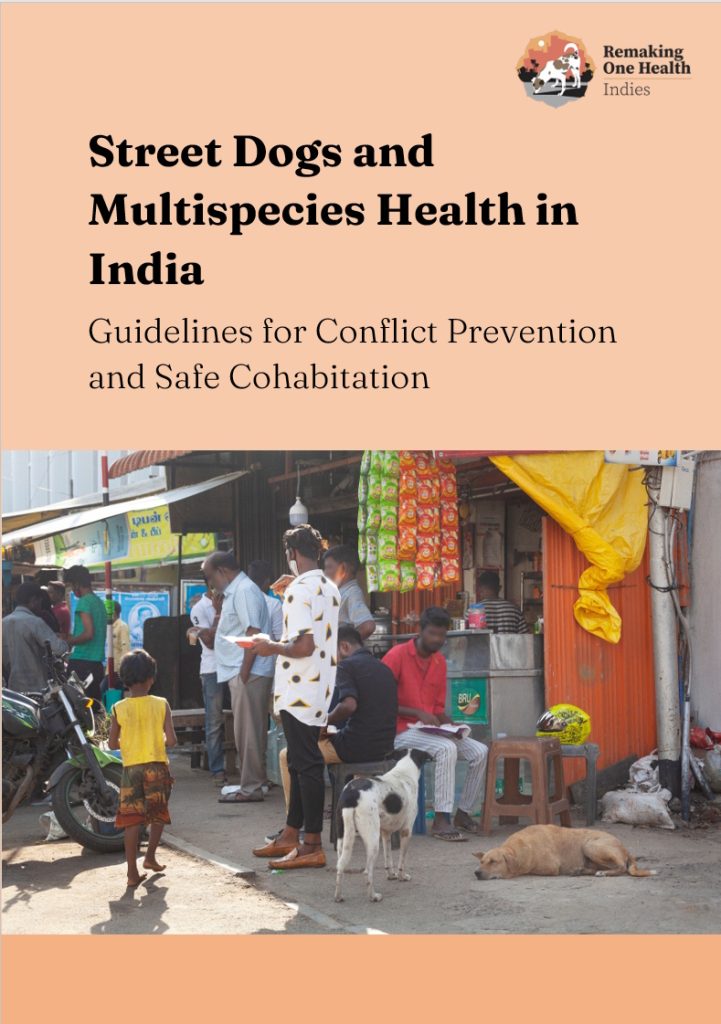
These guidelines contain practical steps and relevant background information on preventing and mitigating street dog-human conflict. They have been developed for individuals, communities, and street dog caregivers with the overarching aim of advancing safe and healthy cohabitation.
The strategies and principles in these guidelines stem from long-term field research in India by the ROH Indies project, which combines human geography, behavioural ecology, social psychology, and history to investigate people-street dog interactions in rural and urban communities. The study encompasses surveys and interviews with the general public, street dog caregivers & practitioners involved in street dog welfare and management, including rabies prevention; on-the-ground socio-ecological observations; and archival, legal and media research. This plurality of vantage points has enabled the project to identify and understand long-term transformations in the social, ecological, and legal landscapes pertaining to street dogs in India.
In particular, these guidelines are shaped by findings on: a) the character of everyday interactions between people and street dogs; b) the key drivers of human-street dog conflict. Our research indicates that changes in caregiving practices have been affecting the diversity of human-street dog relationships and the socio-ecological conditions that have enabled sustained cohabitation. This in turn has led to increased polarisation around street dogs at both the grassroots level and in public and legal platforms. These guidelines, therefore, are designed (a) to prevent and mitigate situations of grassroots conflict; (b) to allow for the wide range of human-street dog relationships to re-emerge; and (c) to strengthen the skills and knowledge needed to foster sustained multispecies cohabitation and health.
You can read the guidelines below: